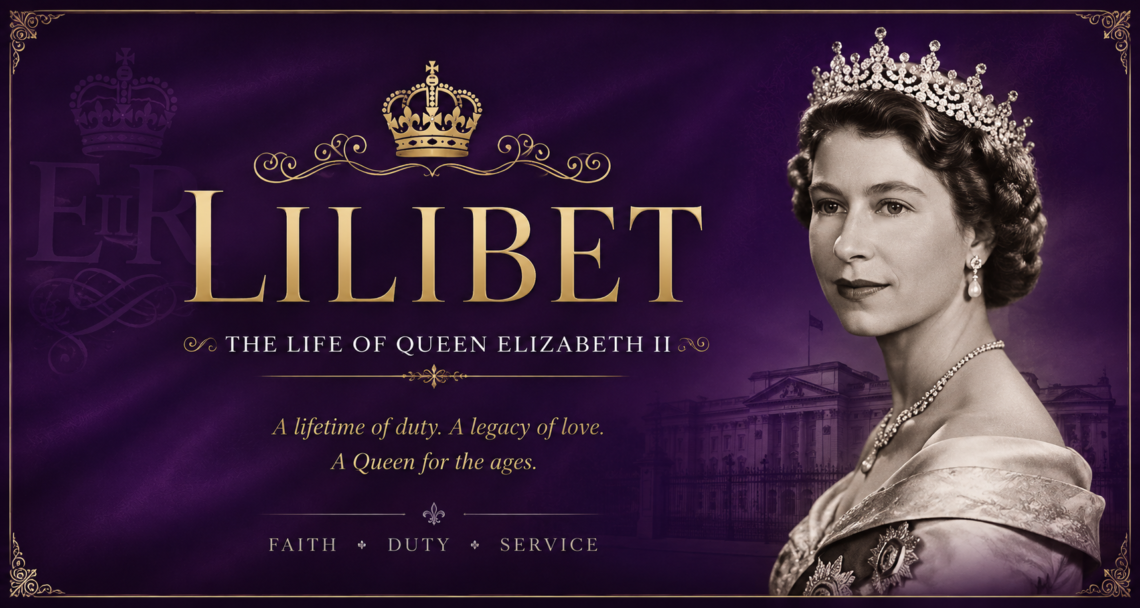
HRH Lilibet (or more correctly, Princess Elizabeth), the Early Years
As an American, I’ve long been fascinated by the character, unwavering sense of duty, and steadfast commitment to country that defined the remarkable 70-year reign of Her Majesty Queen Elizabeth II (1952–2022). Formally styled By the Grace of God, of the United Kingdom of Great Britain and Northern Ireland and of Her other Realms and Territories Queen, Head of the Commonwealth, Defender of the Faith, she became the longest-reigning monarch in British history and one of the most admired public figures of the modern era.
Yet it was not only her historic reign that captured my interest. I found myself equally drawn to the years before she ascended the throne, the formative period when she was known simply as Princess Elizabeth, affectionately called “Lilibet” by her family and close friends.
Elizabeth Alexandra Mary Windsor was born on April 21, 1926, to His Royal Highness The Duke of York, Prince Albert Frederick Arthur George Windsor, and Lady Elizabeth Angela Marguerite Bowes-Lyon, the youngest daughter of the Earl of Strathmore and Kinghorne. Married at Westminster Abbey on April 26, 1923, the Duke and Duchess of York welcomed two daughters: Princess Elizabeth and Princess Margaret Rose.
Chapter 1: The Early Years of Lilibet (1926–1936)
On April 21, 1926, a daughter was born at 17 Bruton Street in London’s fashionable Mayfair district. Christened Elizabeth Alexandra Mary Windsor, she was the first child of Their Royal Highnesses The Duke and Duchess of York, Prince Albert Frederick Arthur George and the former Lady Elizabeth Bowes-Lyon. Although born into the British Royal Family, no one expected the infant princess would one day become Britain’s longest-reigning monarch. Her uncle, Edward, Prince of Wales, stood first in line to the throne, while her father was the King’s second son. Her future appeared likely to be one of quiet royal service rather than sovereign rule.
Within the family, however, she was simply Lilibet.
The affectionate nickname came about when the young princess struggled to pronounce her own name as a toddler. Instead of saying “Elizabeth,” she called herself “Lilibet,” delighting her parents and grandparents. The name quickly became one of love and familiarity, used only by close relatives and a small circle of lifelong friends. Even after ascending the throne, those nearest to her—including her beloved husband, Prince Philip—continued to call her Lilibet, preserving a cherished link to her childhood.
Lilibet was raised in a home filled with love, affection, and strong family values. Her parents worked hard to give their daughters as normal a childhood as possible despite the extraordinary circumstances of royal life. Her father, later King George VI, was a quiet, thoughtful man whose integrity and devotion to duty left a lasting impression on his eldest daughter. Her mother, the Duchess of York, was known for her warmth, kindness, and cheerful spirit, qualities that created a happy and secure home.
On August 21, 1930, Lilibet’s younger sister, Princess Margaret Rose, was born. Although their personalities differed—Lilibet was naturally reserved and conscientious, while Margaret possessed a lively and outgoing temperament—the sisters shared a close and affectionate bond throughout their childhood. They played games together, staged performances for family members, and enjoyed many of the simple pleasures of childhood away from the public eye.
Like many royal children of the era, Lilibet received her education at home. Under the guidance of her governess, Marion Crawford, affectionately known as “Crawfie,” she studied history, literature, geography, languages, music, mathematics, religion, and art. From an early age, she demonstrated a genuine love of learning and an exceptional ability to concentrate. Those who taught her often remarked upon her careful preparation, reliability, and quiet determination to do her best.
Animals were among Lilibet’s greatest joys. She developed a lifelong love of horses and became an accomplished rider while still very young. She was equally devoted to dogs, especially Welsh Corgis, whose intelligence and affectionate nature made them ideal companions. In 1933, the family’s first corgi, Dookie, arrived and began a lifelong association between Lilibet and the breed that would become one of the defining symbols of Queen Elizabeth II.
Family life centered around several royal residences, each holding special memories. At Windsor Castle, Lilibet explored the historic grounds and enjoyed quiet family life. Summers at Balmoral Castle in Scotland fostered her love of the countryside, while Christmas celebrations at Sandringham House became treasured family traditions. Away from formal ceremonies, these homes allowed Lilibet to enjoy a childhood filled with laughter, outdoor adventures, and close family relationships.
Those who knew Lilibet during these early years consistently described her as calm, dependable, and unusually mature for her age. She rarely sought attention, preferred thoughtful observation to loud excitement, and possessed an instinctive sense of responsibility. Even as a child, she displayed the quiet self-discipline that would later become one of the defining characteristics of her reign.
During these peaceful years, there was little reason to believe that Lilibet’s life would be anything other than that of a supportive member of the Royal Family. Yet history often turns on unexpected events. In 1936, a constitutional crisis would forever change the course of her life, transforming the cheerful young princess into the heir presumptive to the British throne and setting her on the path toward one of the most remarkable reigns in modern history.
Chapter 2: Lilibet Becomes the Heir (1936–1945)
The year 1936 marked a turning point not only for the British monarchy but also for the young princess known affectionately as Lilibet. Following the death of her grandfather, King George V, on January 20, her uncle became King Edward VIII. His reign, however, lasted less than a year before a constitutional crisis changed the future of the Royal Family forever.
King Edward VIII wished to marry Wallis Simpson, an American divorcée. The proposed marriage proved unacceptable to the British Government and the Church of England under the conventions of the time. Rather than abandon the woman he loved, Edward chose to abdicate the throne on December 11, 1936, declaring that he could not carry the burden of kingship without her support.
The abdication placed an enormous responsibility upon Lilibet’s father, who reluctantly accepted the Crown as King George VI. Almost overnight, the quiet family life Lilibet had known disappeared. At just ten years old, she became heir presumptive to the British throne. While no formal ceremony marked the occasion, everyone understood that the little girl affectionately called Lilibet might one day become queen.
Rather than shrinking from the responsibility, Lilibet accepted it with remarkable composure. Her education expanded to include constitutional history, parliamentary government, diplomacy, and the responsibilities of a constitutional monarch. Yet despite these additional studies, she remained grounded by her parents, who continued to emphasize humility, kindness, integrity, and service above privilege.
Outside her studies, Lilibet continued to enjoy horseback riding, caring for her beloved corgis, swimming, and spending time with Princess Margaret. Their close relationship provided comfort as public expectations steadily increased. The sisters also participated in family gatherings, holiday traditions, and amateur theatrical performances that offered welcome moments of normality amid the demands of royal life.
When the Second World War began in September 1939, Britain entered one of the darkest periods in its history. Although some believed the princesses should be evacuated overseas, King George VI and Queen Elizabeth insisted they remain in Britain. Lilibet and Margaret spent much of the war at Windsor Castle, where they continued their education while sharing, from a safe distance, in the hardships endured by the nation.
In October 1940, fourteen-year-old Lilibet made her first public radio broadcast on the BBC’s Children’s Hour. Addressing children who had been evacuated because of the war, she spoke with warmth, reassurance, and compassion. The broadcast introduced millions of listeners to the poised young princess and demonstrated the quiet confidence that would later become one of her defining qualities as queen.
Determined to contribute more directly to the war effort, Lilibet joined the Auxiliary Territorial Service (ATS) in 1945. She trained as both a driver and a vehicle mechanic, learning to operate and repair military vehicles. In doing so, she became the first female member of the Royal Family to serve as a full-time active-duty member of the British Armed Forces. Her willingness to undertake practical duties alongside others reflected her lifelong belief that leadership begins with service.
One of Lilibet’s happiest memories came on Victory in Europe Day, May 8, 1945. With permission from her parents, she and Princess Margaret slipped into the jubilant crowds celebrating the end of the war in Europe. For one unforgettable evening, they joined thousands of ordinary citizens in singing, dancing, and celebrating peace. Years later, Queen Elizabeth II would describe it as one of the most memorable nights of her life.
By the conclusion of the Second World War, Lilibet had grown from a carefree little girl into a poised and capable young woman. The experiences of those extraordinary years strengthened her faith, deepened her compassion, and reinforced the unwavering sense of duty that would guide her throughout her life. The young princess who had never expected to inherit the Crown was now steadily preparing for the destiny that awaited her.
Chapter 3: Lilibet Finds Love (1945–1947)
By the end of the Second World War, Lilibet had grown into a confident and accomplished young woman. At nineteen years of age, she had earned the admiration of the British public through her wartime service, yet behind the public image was a young woman whose heart had already been captured years earlier.
Lilibet first met Prince Philip of Greece and Denmark as a child in 1934 during the wedding of Princess Marina of Greece and Denmark to the Duke of Kent. At the time, their meeting was brief and left little impression. Their paths crossed again several years later on July 22, 1939, when King George VI and Queen Elizabeth visited the Royal Naval College at Dartmouth with their daughters.
Philip, then an eighteen-year-old naval cadet, was asked to help entertain the thirteen-year-old Princess Elizabeth and her younger sister, Margaret. Tall, athletic, and confident, Philip immediately caught Lilibet’s attention. Years later, those close to the Royal Family recalled that she rarely took her eyes off the young naval officer during the visit. For Lilibet, it was the beginning of a lifelong romance.
Soon after that meeting, Britain entered the Second World War. Philip served with distinction in the Royal Navy, participating in several major naval operations throughout the conflict. Although separated by war, Lilibet and Philip began exchanging letters. Their correspondence gradually strengthened a friendship that grew into deep affection and mutual respect.
While Philip faced the dangers of wartime service, Lilibet continued carrying out an increasing number of royal duties at home. Despite their busy lives, their relationship continued to flourish. Family members noticed that Lilibet remained devoted to Philip, never wavering in her affection even during the years they spent apart.
Not everyone immediately approved of the match. Philip had been born into the Greek and Danish royal families, and his childhood had been marked by political upheaval and exile. Before their engagement could be announced, he became a naturalized British subject, renounced his foreign royal titles, adopted the surname Mountbatten, and joined the Church of England. Shortly before the wedding, King George VI created him Duke of Edinburgh, Earl of Merioneth, and Baron Greenwich.
On July 9, 1947, Buckingham Palace officially announced the engagement of Princess Elizabeth and Lieutenant Philip Mountbatten. The news was warmly received by much of the British public, who saw the young couple as a symbol of hope and renewal following the hardships of war. Lilibet later recalled that she had accepted Philip’s proposal months earlier while the family was staying at Balmoral Castle.
Preparations soon began for what would become one of the most celebrated royal weddings of the twentieth century. Britain was still recovering from the effects of war, and rationing remained in place. Determined to set an example, Lilibet used clothing ration coupons—supplemented by coupons donated by the government—to purchase the materials for her wedding gown. Designed by renowned British designer Sir Norman Hartnell, the elegant ivory satin dress was inspired by Botticelli’s Primavera and beautifully embroidered with floral motifs symbolizing hope, renewal, and prosperity.
On November 20, 1947, millions of people around the world followed the wedding of Princess Elizabeth and Prince Philip at Westminster Abbey. More than 2,000 guests filled the historic abbey, while countless well-wishers lined the streets of London hoping to catch a glimpse of the newlyweds. The ceremony was broadcast by radio to an estimated 200 million listeners worldwide, offering a welcome moment of joy during Britain’s post-war recovery.
Following the ceremony, the couple appeared together on the balcony of Buckingham Palace to greet the cheering crowds before leaving for their honeymoon. For Lilibet, the day marked the beginning of a marriage that would endure for more than seventy-three years. Through decades of public service, international travel, triumphs, and personal challenges, Prince Philip would remain her steadfast companion and greatest source of support.
Although happily married, neither Lilibet nor Philip could know how quickly their lives would change. King George VI’s health was beginning to decline, and within only a few years the young princess would be called upon to fulfill the destiny that had unexpectedly been placed before her as a ten-year-old girl. The next chapter of Lilibet’s life would see her transformed from devoted wife and young mother into Queen Elizabeth II, beginning one of the most remarkable reigns in British history.
Chapter 4: From Lilibet to Queen (1947–1952)
Lilibet’s marriage to Prince Philip marked the beginning of a happy new chapter in her life. After their honeymoon at Broadlands, the country home of Lord Mountbatten, and at Birkhall on the Balmoral estate in Scotland, the newlyweds settled into married life. Philip resumed his naval career, while Lilibet gradually assumed an increasing number of royal engagements on behalf of her father, King George VI.
Although she had carried royal responsibilities since childhood, Lilibet cherished the quieter moments she spent with Philip. Friends and family often remarked that she appeared happiest when away from formal ceremonies, enjoying country walks, horseback riding, or evenings with her growing family. Despite the demands placed upon her, she remained devoted to creating as normal a home life as possible.
On November 14, 1948, the couple welcomed their first child, Prince Charles Philip Arthur George, at Buckingham Palace. Becoming a mother brought Lilibet immense joy. Two years later, on August 15, 1950, their second child, Princess Anne Elizabeth Alice Louise, was born at Clarence House. Lilibet embraced motherhood with the same sense of devotion and duty that characterized every aspect of her life.
While her family life flourished, troubling signs emerged regarding the King’s health. King George VI, a lifelong smoker, began suffering from serious medical problems. His public appearances became less frequent, and Lilibet quietly accepted more official duties on his behalf. She traveled throughout Britain and represented the Crown at numerous public events, gaining valuable experience while supporting her father during an increasingly difficult period.
Those close to the Royal Family could see that the King was preparing his eldest daughter for the responsibilities that lay ahead. Although he rarely spoke openly about his illness, he recognized that Lilibet would one day inherit the Crown. Their close relationship grew even stronger during these years, built upon mutual respect, affection, and a shared understanding of duty.
In early 1952, Lilibet and Prince Philip embarked on an overseas tour representing the King. The journey was intended to strengthen ties throughout the Commonwealth and included visits to several countries before continuing to Australia and New Zealand. On February 5, 1952, the couple arrived in Kenya, where they spent the night at the famous Treetops Hotel, overlooking a wildlife sanctuary. It would prove to be one of the most significant nights in modern royal history.
During the early hours of February 6, 1952, King George VI died peacefully in his sleep at Sandringham House. He was just fifty-six years old. News of the King’s death was carefully relayed to Prince Philip, who then gently informed Lilibet that her beloved father had passed away.
In a single moment, everything changed.
The young woman who had departed Britain as Princess Elizabeth instantly became Queen Elizabeth II. There was no coronation, no ceremony, and no formal proclamation required for the succession to occur. Under the centuries-old principle, “The King is dead. Long live the King,” the Crown passed immediately to the next sovereign. Lilibet had become Queen.
Despite the overwhelming personal grief of losing her father, the new Queen displayed the quiet composure that had defined her throughout her life. Arrangements were made to return immediately to Britain. Upon landing at London Airport, she stepped from the aircraft dressed in black mourning clothes, greeted not as Princess Elizabeth but as Her Majesty Queen Elizabeth II.
Although the world would soon come to know her by her royal title, those closest to her would never stop calling her Lilibet. The affectionate nickname born from a little girl’s attempt to pronounce her own name remained a treasured reminder of the devoted daughter, loving wife, caring mother, and humble young woman she had always been.
Lilibet’s childhood had been shaped by unexpected responsibility. Her teenage years were forged during war. Her young adulthood brought love, marriage, and motherhood. Now, at only twenty-five years of age, she faced the greatest responsibility of all—to serve as sovereign of the United Kingdom and the Commonwealth.
The next chapter would introduce the world to a new Queen whose reign would span seven decades, fifteen British Prime Ministers, dramatic social change, and countless historic events. Yet beneath the Crown remained the same steady character.
Chapter 5: The Young Queen (1952–1953)
At just twenty-five years old, Lilibet had become Queen Elizabeth II. While the title she carried had changed overnight, the woman beneath the Crown remained the same. She was still the devoted wife, loving mother, and dutiful daughter who had quietly prepared for responsibility throughout her life. Now, however, the responsibilities before her were unlike anything she had ever known.
Following her return from Kenya, the new Queen entered a period of mourning for her beloved father, King George VI. His death was a profound personal loss, yet even in grief, Lilibet understood that duty could not wait. Within hours of his passing, she began carrying out the constitutional responsibilities of the Sovereign, meeting with senior government officials and preparing for the role she had inherited.
One of the first decisions she faced concerned her royal name. Some advisers suggested that she adopt a different regnal name, as several monarchs had done throughout history. Instead, she chose to reign under the name by which she had always been known publicly—Elizabeth. She would become Queen Elizabeth II, honoring both herself and the legacy of Queen Elizabeth I, one of England’s most celebrated monarchs.
Although she was now Queen, the formal coronation would not take place immediately. Tradition called for an appropriate period of national mourning before preparations could begin for the ancient ceremony that would officially symbolize her accession. During those months, Lilibet devoted herself to learning every aspect of her constitutional role. She met regularly with Prime Minister Sir Winston Churchill, reviewed government papers each day, and began establishing the routines that would define her reign for the next seventy years.
Despite her youth, many observers were impressed by the Queen’s calm confidence and meticulous preparation. She approached every briefing thoroughly, asked thoughtful questions, and worked tirelessly to understand the complex affairs of government and the Commonwealth. Those who served alongside her soon realized that beneath her quiet demeanor was an unwavering commitment to duty.
Prince Philip became one of her greatest sources of strength during this transition. Having given up his active naval career to support his wife, he adjusted to a new and often difficult role as the husband of the reigning monarch. Although the constitutional realities of the monarchy required him to walk a step behind the Queen during official ceremonies, privately the couple remained devoted partners who relied heavily upon one another.
The months leading to the coronation were filled with careful planning. Westminster Abbey, where English and British monarchs had been crowned for centuries, was prepared for one of the grandest ceremonies in modern history. Representatives from across the United Kingdom and the Commonwealth received invitations, while millions of people eagerly anticipated the historic event.
One of the most significant decisions surrounding the coronation involved television. Until then, coronations had been witnessed only by those present inside the Abbey or by those listening on the radio. Some senior officials believed television cameras should be prohibited from entering such a sacred ceremony. Others argued that broadcasting the event would allow people throughout Britain and the Commonwealth to share in this historic moment.
The Queen ultimately supported televising nearly the entire ceremony. It proved to be one of the defining decisions of her early reign. On June 2, 1953, millions of viewers gathered around television sets—many for the very first time—to witness the coronation live. Streets, community halls, churches, and neighbors’ homes filled with families eager to watch history unfold together. For many Britons, purchasing a television became worthwhile simply to witness their young Queen crowned.
Dressed in an exquisite gown designed by Sir Norman Hartnell, embroidered with floral emblems representing the nations of the United Kingdom and the Commonwealth, the Queen entered Westminster Abbey in solemn procession. During the ceremony, she swore the Coronation Oath, promising to govern according to law, uphold justice, and preserve the Protestant faith. She was then anointed with holy oil, invested with the ancient symbols of monarchy, and crowned with St. Edward’s Crown, a moment that symbolized not merely royal authority but a lifelong commitment to serve.
As the Abbey echoed with cries of “God Save the Queen,” a new chapter in British history officially began. The young woman once affectionately known only as Lilibet had become the crowned Sovereign of the United Kingdom and Head of the Commonwealth. Yet those closest to her knew that the humility, faith, discipline, and quiet determination that had shaped Lilibet’s childhood remained unchanged.
The coronation did not represent the culmination of Lilibet’s journey—it marked its true beginning. Before her lay decades of constitutional service, world travel, meetings with presidents, prime ministers, and popes, and the challenge of guiding the monarchy through a rapidly changing world. The little girl who had never expected to wear the Crown had now accepted it with grace, believing, as she always had, that privilege carried with it an enduring obligation to serve others.
Chapter 6: A Queen for a New Elizabethan Age (1953–1960)
Following her coronation, Lilibet—now known to the world as Her Majesty Queen Elizabeth II—began the immense task of leading a monarchy through one of the most transformative periods in modern history. Although the world increasingly knew her only by her royal title, those closest to her continued to affectionately call her Lilibet, a name that reminded them of the warm-hearted young woman behind the Crown.
The years immediately following the coronation were exceptionally busy. Determined to fulfill the promises she had made on Coronation Day, the Queen embarked on an ambitious schedule of public engagements, state ceremonies, and international travel. She understood that the monarchy had to remain visible and connected to the people it served. Rather than allowing the Crown to become a distant institution, Lilibet believed it should represent continuity, stability, and national unity.
One of the defining events of her early reign was an extensive tour of the Commonwealth. Between 1953 and 1954, Queen Elizabeth II and Prince Philip traveled more than 40,000 miles, visiting thirteen countries over six months. It was the longest overseas tour ever undertaken by a reigning British monarch at that time. Millions of people lined streets, gathered in public squares, and waited for hours simply to catch a glimpse of their young Queen.
Throughout the journey, Lilibet demonstrated remarkable stamina. Day after day, she attended ceremonies, inspected military parades, delivered speeches, met local leaders, and greeted countless citizens. Whether visiting bustling cities or remote communities, she approached each engagement with genuine interest and unwavering professionalism. Her warm smile, composed manner, and ability to put people at ease became defining characteristics of her public life.
At home, Britain was changing rapidly. The hardships of the Second World War were gradually giving way to recovery and renewed optimism. Advances in science, medicine, technology, and transportation transformed everyday life, while television brought the Royal Family into people’s homes in ways previous generations could scarcely have imagined. The Queen recognized that the monarchy also needed to evolve without abandoning its traditions.
Prince Philip played an important role during these years. Curious about science, engineering, and innovation, he encouraged modernization within the Royal Household while continuing to support the Queen in countless public engagements. Although his role was often challenging, he remained Lilibet’s trusted confidant and steadfast companion. Together, they formed one of the most recognizable royal partnerships in history.
Family life also continued to grow. While balancing the demands of public service, Lilibet remained devoted to Prince Charles and Princess Anne. Despite a demanding schedule that often required lengthy overseas tours, she treasured the time spent with her children whenever official duties allowed. Friends frequently remarked that she carefully separated her public responsibilities from her private role as wife and mother.
The late 1950s also witnessed profound changes throughout the British Empire. Many territories sought independence, leading to the emergence of a modern Commonwealth of Nations built upon voluntary cooperation rather than imperial rule. Queen Elizabeth II embraced this transition with remarkable grace, believing that friendship, mutual respect, and shared values could unite nations even as political relationships evolved. Her commitment to the Commonwealth would remain one of the defining priorities of her reign.
On February 19, 1960, another joyful milestone arrived with the birth of her third child, Prince Andrew, at Buckingham Palace. His arrival brought great happiness to the Royal Family and demonstrated that even while carrying the immense responsibilities of the Crown, Lilibet continued to cherish the simple joys of motherhood.
As the first decade of her reign drew to a close, Queen Elizabeth II had firmly established herself as a respected constitutional monarch. Her calm leadership, unwavering dedication to duty, and genuine concern for the people she served earned admiration both at home and abroad. Yet beneath the jewels, ceremonial robes, and historic traditions remained the same woman her family still affectionately called Lilibet.
The little girl who had once played in the gardens of Windsor Castle had grown into a sovereign whose influence extended across continents. The values learned in childhood—humility, perseverance, integrity, and faith—continued to guide every decision she made. They would sustain her through the triumphs and challenges of the decades still to come as she became not only Britain’s Queen, but one of the most recognized and respected leaders in the world.
Chapter 7: Lilibet and a Changing World (1960–1969)
As the 1960s unfolded, the world around Lilibet changed at an extraordinary pace. Advances in science and technology, the Civil Rights Movement, the Space Race, shifting social values, and the rapid growth of television transformed everyday life across the globe. Through it all, Queen Elizabeth II remained a steady and reassuring presence, providing continuity during a decade marked by dramatic change.
Although the public knew her almost exclusively as Her Majesty The Queen, her closest family and lifelong friends still affectionately called her Lilibet. Behind the formality of the Crown remained the same thoughtful woman whose quiet determination had first become evident in childhood.
During this decade, the Commonwealth continued to expand as many former British colonies achieved independence. Rather than viewing these changes as a loss, Lilibet embraced the evolution of the Commonwealth into a voluntary association of independent nations. She believed that mutual respect, friendship, and cooperation would provide a stronger foundation than political control. Her commitment to visiting Commonwealth countries reinforced those ideals and helped strengthen relationships that continue today.
The Queen’s family also continued to grow. On March 10, 1964, she and Prince Philip welcomed their fourth and youngest child, Prince Edward Antony Richard Louis. Although her responsibilities as sovereign were immense, Lilibet always sought to make time for her children whenever possible. Family holidays at Balmoral Castle in Scotland and Sandringham House in Norfolk provided opportunities to enjoy life away from the constant attention of the public and the press.
Prince Philip remained an indispensable source of support. While accompanying the Queen on countless overseas tours and official engagements, he also pursued his own interests in conservation, education, science, and youth development. In 1956, he had established The Duke of Edinburgh’s Award, a program encouraging young people to develop leadership, service, physical fitness, and practical skills. By the 1960s, the program had expanded internationally and positively influenced hundreds of thousands of young people.
The Royal Family also entered people’s homes in an entirely new way. In 1969, Buckingham Palace approved the production of the documentary Royal Family, offering an unprecedented glimpse into the daily lives of the Queen, Prince Philip, and their children. Millions watched as Lilibet was shown not only attending state ceremonies but also sharing ordinary family moments, cooking at a barbecue, and laughing with her children. The documentary helped humanize the monarchy and allowed many people to see the family behind the formal pageantry.
That same year, another milestone captured the attention of the nation. On July 1, 1969, Prince Charles was formally invested as Prince of Wales during a ceremony at Caernarfon Castle in Wales. Lilibet watched with pride as her eldest son accepted the title traditionally held by the heir to the British throne. It represented another step in preparing the next generation for future responsibilities.
Despite the rapid changes occurring throughout society, Queen Elizabeth II remained committed to the constitutional principles that had guided British monarchs for generations. She carefully avoided political controversy, respected the democratic process, and worked closely with her Prime Ministers while remaining above party politics. Her consistency earned respect from leaders across the political spectrum and reinforced public confidence in the monarchy.
The 1960s were not without challenges. The media’s growing interest in the private lives of public figures meant that the Royal Family received unprecedented scrutiny. Lilibet understood that modern communications had forever changed the relationship between the monarchy and the public. Rather than retreating from public life, she sought thoughtful ways to balance openness with the privacy necessary for family life.
By the close of the decade, Queen Elizabeth II had become one of the world’s most recognizable figures. Her image appeared on postage stamps, banknotes, and coins throughout the Commonwealth, while millions had seen her during royal tours or watched her on television. Yet despite her global prominence, those who knew her best often remarked that success had not changed her character. She remained modest, disciplined, deeply faithful, and firmly committed to serving others.
For Lilibet, the Crown had never been about personal importance or privilege. It was a solemn trust passed from one generation to the next—a promise to place duty before self and to serve with integrity regardless of changing times. Those principles had guided her since childhood, and they would continue to define her reign as the world entered a new and increasingly complex era.
Chapter 8: Lilibet’s Silver Jubilee (1970–1979)
The 1970s brought new opportunities and new challenges for Queen Elizabeth II. Nearly two decades had passed since the young woman affectionately known as Lilibet had inherited the Crown while visiting Kenya in 1952. During those years, she had become a respected world leader, visiting dozens of countries and meeting millions of people. Yet despite her growing international stature, her family continued to know her by the nickname that had originated in childhood.
The decade began with continued travel throughout the United Kingdom and the Commonwealth. Lilibet believed that a monarch should never become distant from the people she served. Whether visiting a bustling city, a rural farming community, or a small island nation, she approached every engagement with the same warmth, patience, and attention to detail. She had an extraordinary ability to make individuals feel valued, often remembering names, previous conversations, and personal details from earlier meetings.
As international travel became more common, the Queen’s overseas tours assumed increasing diplomatic importance. She represented Britain during a period marked by economic uncertainty, political change, and shifting global alliances. Although constitutional convention required her to remain politically neutral, her presence often strengthened relationships between nations and reinforced the importance of the Commonwealth.
At home, Britain experienced difficult economic conditions during much of the 1970s. Rising inflation, labor disputes, and energy shortages created uncertainty for many families. Throughout these challenges, Lilibet continued her constitutional role with quiet steadiness, regularly meeting with Prime Ministers and carrying out hundreds of public engagements each year. She remained careful never to express political opinions publicly, believing that the Sovereign should unite the nation rather than divide it.
One of the happiest milestones of the decade came on November 20, 1972, when Lilibet and Prince Philip celebrated their Silver Wedding Anniversary, marking twenty-five years of marriage. Their partnership had become one of the strongest foundations of the modern monarchy. Prince Philip continued to support the Queen with unwavering loyalty while pursuing his own charitable interests, particularly through The Duke of Edinburgh’s Award. Together they demonstrated a shared commitment to public service that inspired many throughout Britain and the Commonwealth.
The defining event of the decade arrived in 1977, when Britain celebrated the Silver Jubilee of Queen Elizabeth II’s accession to the throne. Twenty-five years earlier, the young Princess Elizabeth had unexpectedly become Queen following the death of King George VI. Few could have imagined that her reign would become one of the longest and most admired in British history.
Throughout the Jubilee year, Lilibet and Prince Philip traveled extensively across the United Kingdom and the Commonwealth. They visited England, Scotland, Wales, and Northern Ireland, meeting people from every walk of life. Streets were decorated with Union Flags, neighborhoods organized community celebrations, churches held services of thanksgiving, and thousands of local events honored the occasion. Millions gathered simply to catch a glimpse of the Queen, whose calm leadership had become a reassuring constant during a period of considerable national change.
The celebrations extended far beyond Britain. Across the Commonwealth, citizens welcomed the Queen with enthusiasm, recognizing not only her position as Sovereign but also her personal dedication to strengthening the bonds among member nations. The Jubilee became a celebration of continuity, service, and shared history.
During one memorable address, the Queen reflected on the promise she had made as a young princess on her twenty-first birthday in 1947. Speaking from South Africa, she had pledged that her whole life, “whether it be long or short,” would be devoted to the service of her people. Three decades later, she reaffirmed that commitment, expressing gratitude for the support and affection she had received throughout her reign. Those words reminded many that the promise made by the young Princess Elizabeth had never been forgotten.
The Silver Jubilee also highlighted the remarkable transformation of the monarchy under Lilibet’s leadership. Advances in television had allowed millions to witness royal ceremonies and speeches. Overseas tours brought the Queen into direct contact with people across continents. The monarchy had become more accessible while preserving the traditions that linked it to centuries of British history.
Behind the public celebrations, Lilibet remained the same woman her family had always known. She continued to enjoy horseback riding, long walks in the countryside, spending time with her corgis, and relaxing at Balmoral Castle whenever her demanding schedule allowed. Those closest to her often remarked that she was happiest away from ceremony, enjoying simple moments with family and friends.
As the 1970s came to an end, Queen Elizabeth II had completed a quarter-century on the throne. Her quiet dignity, unwavering sense of duty, and steadfast devotion to public service had earned admiration around the world. Yet for those who loved her most, she was still simply Lilibet—the little girl whose childhood nickname had remained a treasured reminder of the person behind the Crown.
The years ahead would bring both great celebrations and profound personal challenges. Through every triumph and every trial, the principles that had guided Lilibet since childhood—faith, humility, resilience, and duty—would continue to define her remarkable reign.
Chapter 9: Lilibet Through Years of Change (1980–1992)
The 1980s ushered in a new chapter for both the monarchy and the world. Britain witnessed rapid technological advances, shifting political landscapes, and changing social attitudes. Through every transition, Queen Elizabeth II remained a symbol of continuity and stability. While the public saw a confident and experienced sovereign, those closest to her still knew her simply as Lilibet—a nickname that reminded them of the little girl whose life had changed so dramatically in 1936.
As the decade began, Lilibet embraced one of her favorite roles—that of grandmother. On June 21, 1982, her first grandchild, Prince William Arthur Philip Louis, was born to The Prince and Princess of Wales. Two years later, on September 15, 1984, the family welcomed Prince Henry Charles Albert David, known to the world as Prince Harry. Friends often remarked that the Queen thoroughly enjoyed spending time with her grandchildren, delighting in the opportunity to simply be “Granny” away from the formalities of royal life.
The wedding of The Prince of Wales and Lady Diana Spencer on July 29, 1981, captured the attention of millions around the globe. Watched by an estimated 750 million television viewers, it was celebrated as a joyous occasion and a hopeful beginning for the future of the monarchy. Lilibet welcomed Diana into the Royal Family and hoped the young couple would find lasting happiness together.
Throughout the decade, the Queen continued an extraordinary schedule of public service. She welcomed presidents, prime ministers, kings, queens, and religious leaders to Buckingham Palace, while undertaking numerous overseas tours representing the United Kingdom and the Commonwealth. Her weekly audiences with Prime Minister Margaret Thatcher, Britain’s first female Prime Minister, became an established constitutional tradition. Although the Queen remained strictly neutral in political matters, the mutual respect shown between sovereign and prime minister reflected the strength of Britain’s constitutional system.
The Commonwealth remained one of Lilibet’s greatest priorities. She believed that the organization represented far more than shared history—it embodied cooperation, mutual respect, and friendship among independent nations. Whether visiting Canada, Australia, New Zealand, nations across Africa, the Caribbean, or Asia, she consistently emphasized the importance of unity despite cultural and geographical differences.
The increasing influence of television and newspapers, however, brought unprecedented public attention to the private lives of the Royal Family. Every appearance, photograph, and family event became international news. Lilibet understood that modern media had permanently changed the relationship between the monarchy and the public. She continued to fulfill her duties with dignity while carefully protecting the privacy of her family whenever possible.
The close of the decade also witnessed historic global events. In 1989, the Berlin Wall fell, symbolizing the end of the Cold War and the reunification of Germany. Like many world leaders, Queen Elizabeth II recognized that Europe and the wider world were entering a new era. Throughout these historic changes, she continued to provide a reassuring sense of continuity, meeting leaders from both longstanding allies and newly emerging democracies.
Despite many public successes, the early 1990s brought increasing personal challenges for the Royal Family. Marital difficulties involving several of the Queen’s children became highly publicized, attracting intense media scrutiny. Lilibet, who had always valued privacy and family unity, found these years particularly painful. Nevertheless, she continued carrying out her constitutional duties without allowing personal difficulties to interfere with her service to the nation.
The year 1992 proved especially difficult. It marked the 40th anniversary of her accession to the throne, yet it also brought a series of deeply distressing events. Marriages within the Royal Family continued to break down, drawing worldwide media attention. Then, on November 20, 1992, a devastating fire swept through Windsor Castle, destroying or damaging more than one hundred historic rooms. Although many priceless treasures were saved through the heroic efforts of staff and firefighters, the damage to one of Britain’s most cherished royal residences was extensive.
Later that year, during a speech marking the fortieth anniversary of her accession, Lilibet described 1992 using the Latin phrase annus horribilis, meaning “a horrible year.” It was an unusually personal reflection from a monarch known for her reserve. Yet even in expressing disappointment, she reaffirmed her belief that criticism should be met with humility, reflection, and a determination to improve.
The challenges of 1992 tested Lilibet’s resilience as never before. Public confidence in the monarchy was questioned, the press grew increasingly intrusive, and personal heartbreak unfolded in full view of the world. Yet the same qualities that had guided her since childhood—faith, patience, dignity, and an unwavering commitment to duty—enabled her to persevere.
As another chapter of her remarkable reign unfolded, Lilibet would face even greater trials. The years ahead would include one of the most painful moments in modern royal history, but they would also demonstrate her remarkable ability to adapt, heal, and continue serving with grace and steadfast devotion.
Chapter 10: Lilibet and the People’s Princess (1992–1997)
The years following 1992, the Queen’s self-described annus horribilis, proved to be among the most challenging of Lilibet’s reign. Public scrutiny of the Royal Family intensified, newspapers competed for increasingly personal stories, and the monarchy found itself facing questions about its role in a rapidly changing society. Through it all, Lilibet remained committed to the principles that had guided her since childhood: duty, dignity, and service.
One of the greatest difficulties involved the marriage of her eldest son, The Prince of Wales, and Diana, Princess of Wales. Once celebrated around the world as a fairy-tale romance, the relationship had become strained under the pressures of public life. In 1992, Prime Minister John Major announced to Parliament that the Prince and Princess of Wales had separated. Although they continued to carry out many public duties, it became increasingly apparent that reconciliation was unlikely.
As both sovereign and mother, Lilibet found herself in an exceptionally difficult position. She deeply loved her family but also understood her constitutional responsibility to protect the stability and reputation of the monarchy. Throughout these deeply personal matters, she remained careful not to comment publicly, believing that private family concerns should not become matters for public debate.
In 1995, after years of growing tension, Lilibet wrote separately to both Charles and Diana, encouraging them to consider bringing their marriage to a formal conclusion. Their divorce was finalized on August 28, 1996. While the end of the marriage saddened many throughout Britain and the Commonwealth, the Queen hoped that clarity would allow both to move forward while continuing to devote themselves to the welfare of Princes William and Harry.
No one could have anticipated the tragedy that would follow.
During the early hours of August 31, 1997, Diana, Princess of Wales, was fatally injured in a car crash in Paris. The news stunned the world. Millions mourned the loss of a woman admired for her compassion, humanitarian work, and ability to connect with people from every walk of life. Mountains of flowers soon surrounded the gates of Kensington Palace and Buckingham Palace as mourners gathered to express their grief.
At the time of Diana’s death, Lilibet was staying at Balmoral Castle in Scotland with Prince William and Prince Harry. Her first concern was for her grandsons, who had suddenly lost their mother while still young boys. Believing they needed privacy, comfort, and protection from the relentless attention of the world’s media, she chose to remain at Balmoral for several days. There, surrounded by family, William and Harry were able to begin processing their unimaginable loss away from the cameras.
Some members of the public and media questioned why the Queen had not immediately returned to London. As public emotion intensified, criticism of the monarchy grew. Lilibet understood the depth of the nation’s sorrow and recognized that many people desired visible leadership during this period of mourning.
On September 5, 1997, the Queen returned to Buckingham Palace. Before Diana’s funeral, she addressed the nation in a rare live television broadcast. Speaking not only as Sovereign but also as a grandmother, she paid tribute to Diana’s compassion, warmth, and devotion to her sons. Her words expressed sympathy for the millions who mourned while acknowledging the profound grief experienced by Princes William and Harry.
The following day, September 6, Lilibet stood outside Buckingham Palace with other members of the Royal Family as Diana’s funeral procession passed. In a gesture that attracted worldwide attention, the Queen bowed her head as the coffin moved before her—a simple yet deeply meaningful sign of respect for the Princess and for the overwhelming grief shared by the nation.
For many observers, the events surrounding Diana’s death marked a turning point for the modern monarchy. Lilibet demonstrated that while tradition remained important, compassion and responsiveness to public feeling were equally essential. In the months and years that followed, the Royal Household adopted a more open approach to communication while preserving the constitutional neutrality that remained central to the Crown.
The experience also revealed another side of Lilibet’s character. Behind the reserved public image was a grandmother determined to protect two grieving boys during the darkest days of their young lives. Those who knew her understood that her decisions had been motivated not by indifference, but by a deeply held belief that family should come first in moments of profound loss.
As the twentieth century drew to a close, Queen Elizabeth II continued to guide the monarchy with quiet determination. The storms of the 1990s had tested both the institution and the woman at its center, yet Lilibet emerged with her lifelong commitment to service unchanged. The little girl who had unexpectedly become heir to the throne had once again demonstrated the resilience that would define one of history’s most remarkable reigns.
The new millennium would bring renewed optimism, national celebrations, and unprecedented milestones. It would also see Lilibet become one of the most admired and respected figures in the world, proving that steadfast dedication and humility could endure through even the most difficult of times.
Chapter 11: Lilibet Enters a New Millennium (1998–2011)
As the twentieth century gave way to the twenty-first, Lilibet had served as Queen for nearly half a century. The world had changed beyond recognition since the young princess unexpectedly became heir to the throne in 1936. Nations had gained independence, technology had revolutionized daily life, and the British monarchy had adapted to meet the expectations of a modern age. Through every change, Queen Elizabeth II remained a reassuring symbol of continuity.
Although she was now one of the most recognized women in the world, family members and a handful of lifelong friends still affectionately called her Lilibet. The childhood nickname served as a quiet reminder that behind the Crown was the same thoughtful woman whose life had always been guided by faith, humility, and duty.
As the new millennium began, the Queen continued an extraordinarily demanding schedule. Well into her seventies and eighties, she carried out hundreds of official engagements each year, meeting community volunteers, military personnel, business leaders, students, charity workers, and heads of state from around the globe. Her remarkable work ethic often surprised those who met her for the first time. Careful preparation, punctuality, and an unwavering attention to detail remained hallmarks of her public service.
One of Lilibet’s greatest priorities continued to be the Commonwealth of Nations. She believed deeply in the value of cooperation among its member countries and worked tirelessly to strengthen those relationships. During her reign, she visited nearly every Commonwealth nation, often returning many times over the decades. These journeys reflected her conviction that personal relationships between nations could foster understanding, friendship, and peace.
The early years of the new century also brought joyful family occasions. In 2005, The Prince of Wales married Camilla Parker Bowles in a civil ceremony at Windsor Guildhall, followed by a Service of Prayer and Dedication at St. George’s Chapel, Windsor Castle. Although the marriage attracted considerable public attention, Lilibet welcomed Camilla into the family with grace and kindness, reflecting her belief in forgiveness, compassion, and moving forward.
Technology continued to reshape the monarchy’s relationship with the public. The Royal Household embraced the internet, launching an official website that allowed people around the world to learn more about the Queen’s work and the history of the monarchy. As digital communication expanded, Lilibet recognized the importance of remaining connected to younger generations while preserving the traditions that defined the institution she represented.
One of the defining milestones of this period occurred in 2002, when the Queen celebrated her Golden Jubilee, marking fifty years on the throne. The year was bittersweet. Within weeks of one another, she lost her beloved sister, Princess Margaret, and later her cherished mother, Queen Elizabeth The Queen Mother, who died at the age of 101. Their deaths marked the end of an era and represented deeply personal losses for Lilibet.
Despite her grief, she continued with Jubilee celebrations across the United Kingdom and the Commonwealth. Millions participated in concerts, parades, church services, and community events honoring her fifty years of dedicated service. The public response demonstrated that affection for the Queen had grown stronger over time, and the celebrations became a powerful affirmation of the bond between sovereign and nation.
The Queen’s reputation for calm leadership was further demonstrated during periods of national uncertainty. Whether responding to tragic events, honoring military personnel, or recognizing acts of extraordinary courage by ordinary citizens, Lilibet consistently sought to offer reassurance without overshadowing those directly affected. Her annual Christmas Broadcast became one of the most anticipated traditions of the holiday season, providing messages of hope, gratitude, and reflection to millions of viewers around the world.
Throughout these years, Prince Philip remained at her side. Together they continued to support hundreds of charities and organizations while undertaking countless official engagements. Their partnership, built upon mutual respect and shared purpose, had become one of the longest and most enduring royal marriages in British history.
As the second decade of the twenty-first century approached, Queen Elizabeth II had become far more than Britain’s sovereign. She was an international symbol of stability, integrity, and public service. World leaders came and went, governments changed, and history continued to unfold, yet Lilibet remained a reassuring constant whose quiet dedication inspired admiration across generations.
The little girl who had once answered to the affectionate name “Lilibet” had now devoted nearly six decades to the service of her people. Yet the greatest milestone of her remarkable reign was still just ahead. Within a year, Britain and the Commonwealth would celebrate an unprecedented achievement—the Diamond Jubilee, commemorating sixty years on the throne and confirming Lilibet’s place among the most significant monarchs in British history.
Chapter 12: Lilibet’s Diamond Years (2012–2019)
By 2012, Lilibet had accomplished something no British sovereign before her had achieved—she had reigned for sixty years. The young princess who unexpectedly became Queen at the age of twenty-five was now a beloved monarch whose quiet dedication had earned the admiration of people across the United Kingdom, the Commonwealth, and around the world.
The Diamond Jubilee marked more than six decades on the throne. It celebrated a lifetime devoted to public service and the enduring relationship between the Queen and her people. Throughout the Jubilee year, celebrations were held across Britain and the Commonwealth. Thousands of street parties, church services, concerts, exhibitions, and community events brought people together in tribute to Lilibet’s extraordinary commitment to duty.
One of the most memorable moments of the Jubilee was the Thames Diamond Jubilee Pageant, when hundreds of vessels formed a magnificent flotilla along the River Thames in honor of the Queen. Despite cold temperatures and heavy rain, Lilibet remained on deck for hours, greeting participants with her familiar smile. Her determination impressed many, reflecting the resilience that had characterized her reign from the very beginning.
Later that year, Buckingham Palace hosted the spectacular Diamond Jubilee Concert, where musicians from around the world performed before thousands gathered outside the Palace. The celebrations concluded with a national service of thanksgiving at St. Paul’s Cathedral, reminding many that faith had remained a central part of Lilibet’s life since childhood.
The Queen also demonstrated that tradition and modernity could exist side by side. During the opening ceremony of the 2012 London Olympic Games, she delighted audiences by participating in a lighthearted filmed sequence with actor Daniel Craig as James Bond. The unexpected appearance showcased a playful side of Lilibet rarely seen in public and introduced her to younger generations in a memorable way. It quickly became one of the most talked-about moments of the Olympic Games.
On September 9, 2015, another historic milestone was reached. Queen Elizabeth II surpassed the reign of her great-great-grandmother, Queen Victoria, becoming the longest-reigning monarch in British history. Characteristically modest, Lilibet avoided grand celebrations centered on herself. During a public appearance that day, she remarked that the milestone was “not one to which I have ever aspired,” emphasizing instead that longevity was simply a consequence of continuing to serve.
Those words reflected the philosophy that had guided her entire reign. Lilibet never viewed the Crown as a personal achievement but as a solemn responsibility entrusted to her by history. She consistently placed service before recognition, believing that a monarch’s greatest accomplishment was faithfully carrying out the duties of the office.
Throughout these years, Lilibet remained remarkably active. Even in her late eighties and early nineties, she continued meeting ambassadors, hosting state banquets, presenting honors, visiting charities, and carrying out hundreds of official engagements annually. Her famous red dispatch boxes, containing government papers requiring the Sovereign’s attention, remained part of her daily routine. Week after week, she held audiences with her Prime Ministers, continuing a constitutional tradition that had spanned generations.
Family life also brought moments of happiness. Lilibet watched with pride as her grandchildren assumed greater public responsibilities. In 2011, Prince William married Catherine Middleton, and in 2018, Prince Harry married Meghan Markle. The Queen warmly welcomed new members into the Royal Family while expressing confidence in the younger generation’s ability to contribute to public life.
Prince Philip remained by her side throughout much of this period before gradually reducing his public engagements and officially retiring from royal duties in 2017. After decades of steadfast support, he left public life having completed more than 22,000 solo engagements. Lilibet often acknowledged the invaluable role he had played throughout her reign, describing him on numerous occasions as her “strength and stay.”
As the decade drew to a close, the Queen’s popularity remained exceptionally strong. Around the world, she was admired for her composure, discretion, and unwavering devotion to duty. In an era often characterized by rapid change and uncertainty, Lilibet represented stability, continuity, and quiet leadership.
Yet another challenge awaited. The final years of her life would test her resilience once more. A global pandemic would alter daily life across the world, personal loss would touch the Royal Family again, and Lilibet would face those trials with the same courage and dignity that had defined her since childhood.
Looking back over more than six decades, it became clear that Queen Elizabeth II’s greatest legacy was not simply the length of her reign. It was the consistency of her character. Whether known as the little girl called Lilibet, the young Queen crowned in Westminster Abbey, or the world’s longest-reigning British monarch, she remained guided by the same enduring principles of faith, humility, integrity, and service.
Chapter 13: Lilibet’s Final Journey and Enduring Legacy (2020–2022)
The final years of Lilibet’s remarkable life were marked by both profound sorrow and extraordinary celebration. Even as she entered her nineties, Queen Elizabeth II remained steadfast in her commitment to duty, determined to serve for as long as her strength allowed. The promise she had made as a twenty-one-year-old princess in 1947—that her whole life would be devoted to the service of her people—continued to guide her every decision.
In early 2020, the world was transformed by the COVID-19 pandemic. Nations closed their borders, millions of families were separated, and uncertainty became a daily reality. Like countless others, the Royal Family adapted to new ways of working and communicating. Public engagements were postponed or conducted virtually, but Lilibet continued to fulfill her constitutional responsibilities from Windsor Castle.
On April 5, 2020, she delivered a rare televised address to the nation and the Commonwealth. Speaking with the calm confidence that had reassured generations during times of crisis, she acknowledged the sacrifices being made by healthcare workers, essential personnel, volunteers, and families. Her closing words, “We will meet again,” echoed the famous wartime song made popular by Dame Vera Lynn and became a source of comfort and hope for millions.
The following year brought the greatest personal loss of her reign.
On April 9, 2021, Prince Philip, Duke of Edinburgh, died peacefully at Windsor Castle at the age of ninety-nine, just weeks before his one hundredth birthday. After more than seventy-three years of marriage, Lilibet had lost not only her husband but also her closest confidant, trusted adviser, and constant companion.
Because of pandemic restrictions, Prince Philip’s funeral at St. George’s Chapel, Windsor Castle, was attended by only a limited number of mourners. One image from the service resonated around the world: Lilibet, dressed in black and seated alone in the chapel, quietly mourning the man who had stood beside her throughout nearly her entire reign. The photograph became a powerful symbol of personal sacrifice and shared loss during a time when countless families around the world faced similar circumstances.
Despite her grief, Lilibet continued her public duties. Those who worked with her observed the same determination and sense of responsibility that had characterized her entire life. She believed that the Crown represented continuity and stability, and she remained committed to serving her people even while carrying the weight of profound personal sorrow.
In 2022, Britain and the Commonwealth celebrated an achievement without precedent in the nation’s history—the Platinum Jubilee, commemorating seventy years of Queen Elizabeth II’s reign. Street parties, concerts, military parades, religious services, and community events were held across the United Kingdom and throughout the Commonwealth. Millions gathered to express their gratitude for a lifetime of faithful service.
Although age and declining mobility limited her public appearances, Lilibet participated whenever possible. Her surprise appearance on the balcony of Buckingham Palace during the Jubilee celebrations delighted the crowds gathered below and served as a reminder of the remarkable bond she had forged with her people over seven decades.
Only a few months later, on September 6, 2022, Lilibet carried out what would become her final constitutional duty. At Balmoral Castle in Scotland, she formally invited Liz Truss to form a new government as Prime Minister of the United Kingdom. Even at ninety-six years of age, the Queen remained committed to fulfilling her constitutional responsibilities.
Two days later, on September 8, 2022, Queen Elizabeth II died peacefully at Balmoral Castle, surrounded by members of her family. She was ninety-six years old and had reigned for seventy years and 214 days, the longest reign of any British monarch and one of the longest of any sovereign in recorded history.
News of her passing prompted an unprecedented outpouring of grief and remembrance. Church bells tolled across Britain. Flags were lowered to half-staff. Thousands gathered outside Buckingham Palace, Windsor Castle, and Balmoral to lay flowers, offer prayers, and pay their respects. World leaders, religious figures, and citizens from every corner of the globe honored a woman whose life had become synonymous with duty, dignity, and steadfast service.
Following a period of national mourning, Lilibet’s state funeral was held on September 19, 2022, at Westminster Abbey—the same church where she had been married in 1947 and crowned in 1953. It was one of the largest gatherings of world leaders and dignitaries in modern history. Millions watched the ceremony on television and online, while countless others lined the streets of London to bid farewell to their Queen.
After the funeral, Queen Elizabeth II was laid to rest in the King George VI Memorial Chapel at St. George’s Chapel, Windsor Castle, beside her beloved husband, Prince Philip, and near her parents and sister. It was a fitting resting place for a woman whose life had been devoted to family, faith, and service.
To history, she will forever be remembered as Queen Elizabeth II, Britain’s longest-reigning monarch and one of the most respected sovereigns the world has known. To generations of people throughout the United Kingdom and the Commonwealth, she represented stability during times of uncertainty, grace in moments of triumph, and quiet strength through adversity.
Yet behind the jeweled Crown, the state ceremonies, and the centuries-old traditions remained the little girl whose family lovingly called her Lilibet. It was that thoughtful, humble, and devoted young princess who became the foundation of the extraordinary Queen the world came to admire.
Lilibet’s life reminds us that true greatness is not measured solely by power or position, but by character, faith, perseverance, and a lifetime spent in service to others. Her reign shaped history, but her example continues to inspire it.